
3 Tips for Defending the Single Wing Offense

Written by Joe Daniel
Joe Daniel Football
NOVEMBER 19, 2026
The Single Wing Offense can create a lot of problems for your defense if you're not ready. It's an offense that most teams don't see very often, and when you do see it, you're probably facing a team that runs it very well. (Figure 1)
The offense features multiple backs who can carry the football and often uses unbalanced formations and misdirection. The ball can hit inside, get outside, or come back the other direction on a counter before your defense figures out what's happening.
And that's where coaches start getting themselves in trouble.
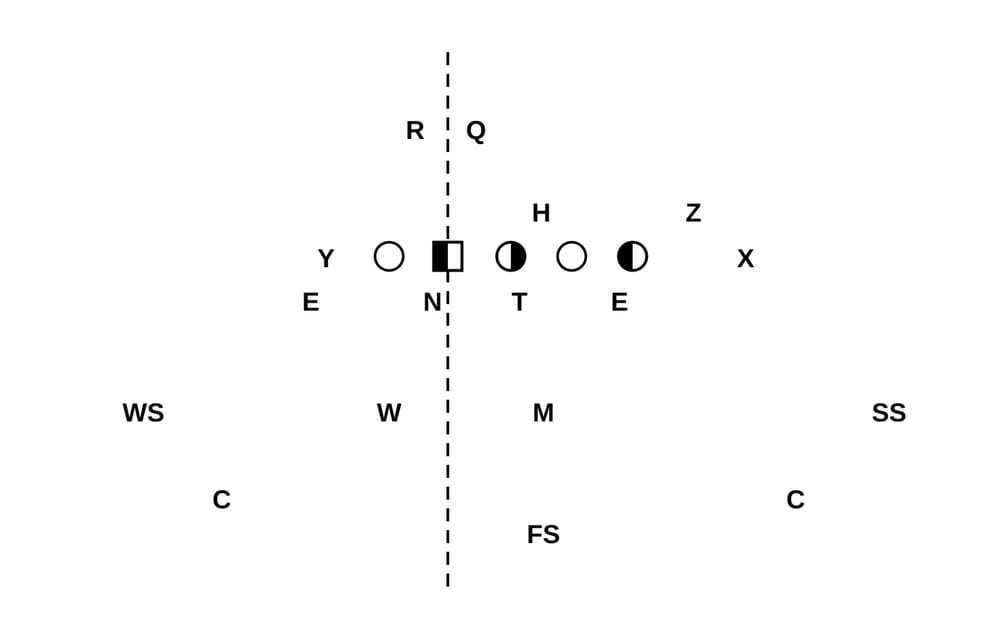
Figure 1: Failure to recognize the unbalanced formation the Single Wing Offense often uses leaves your team outnumbered to the strong side of the formation.
You spend all season building your defense, teaching your players their key reads, and getting everybody to understand their assignments. Then you see the Single Wing on your opponent's film and decide you need to install an entirely new defense to stop it.
You don't need a new defense. In fact, installing one just for this game is more likely to get you beat.
Here are three tips for defending the Single Wing Offense without throwing out everything your players have learned all season.
Defending the Single Wing Tip #1: No Gimmicks
One of the things I learned from running the Single Wing in our Pistol Power Offense System is that there's nothing better than seeing a defense line up in something they've never played before.
Defenders are out of position. They're uncomfortable. They're trying to remember new assignments instead of reacting to what they see. That's exactly what this offense wants.
Your first priority when defending the Single Wing should be to maintain the defensive system you've been running all season. Then use ASKA adjustments as needed.
ASKA stands for Alignment, Stance, Key Reads, and Assignment. It's the most important tool you have for making defensive adjustments against different offensive looks.
Against the Single Wing, you're probably going to need to adjust your alignment. But that doesn't mean you need to change everything else.
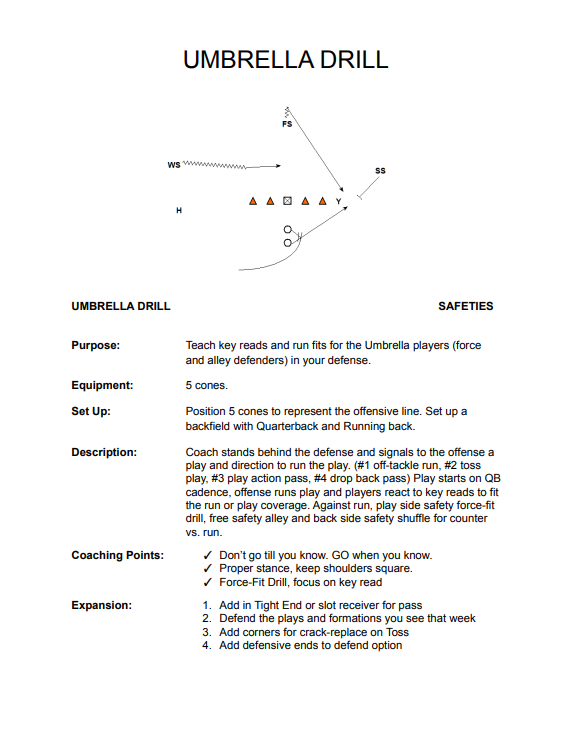
Your defensive linemen must still squeeze down blocks and fight reach blocks. Your linebackers must still follow pulling guards. Your force players must still force a change of direction on outside run plays, and your alley players must still tie together the spill and force defenders.
For more on these responsibilities, check out our article on Umbrella Run Fits.
If you're running one of the JDFB Premium Coaching Systems defenses, those are the things your players have been practicing all season long.
You'll need to make adjustments depending on what the offense does best. But you should always have an answer that allows your players to execute the defense they already know.
Don't spend Monday installing a gimmick defense that looks great on the whiteboard. It's going to lead to a lot of frustration on Friday night when your players fail to execute it.
Defending the Single Wing Tip #2: Unbalanced Adjustments
The unbalanced offensive line is one of the biggest challenges when defending the Single Wing. If your defense doesn't recognize the unbalanced formation, the offense has an immediate numbers advantage.
The first thing you need to do is establish who is responsible for identifying an unbalanced offensive line. Your defense should be checking for unbalanced formations all season long, not just when you're preparing for the Single Wing.
In our defense, that responsibility falls on the Mike Linebacker. He's responsible for finding the player snapping the football and making sure there are two ineligible offensive linemen on either side of him.
If there are three ineligible numbers to one side of the player snapping the football, we're looking at an unbalanced formation. We identify the middle of those five offensive linemen as the center for our defensive alignment, even though he isn't necessarily the player snapping the football.
From there, we make our unbalanced adjustment.
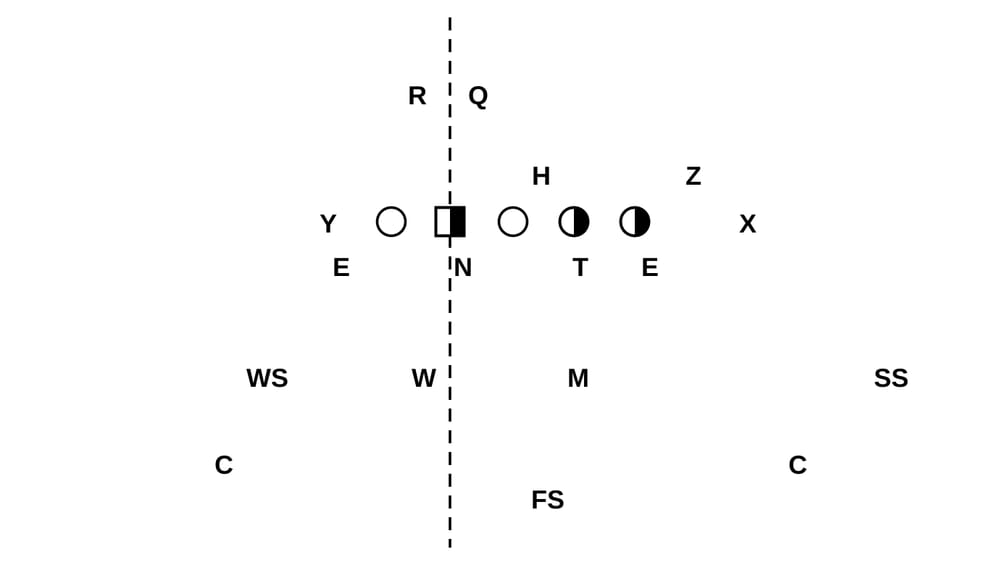
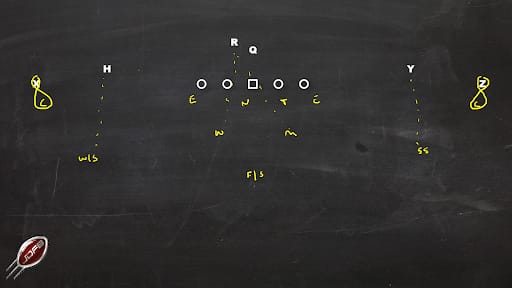
Figure 2: Sliding the entire defense over one man gets the count back to even, with the Free Safety responsible for the alley to either side. This is our base adjustments to unbalanced formations.
Our standard adjustment is to move the entire defense over one man. Essentially, we're lining up as if the middle of those five offensive linemen were snapping the football. (Figure 2)
But that's not the only adjustment available. You can move only the defensive line and leave the linebackers where they are. You can slide the linebackers toward the unbalanced side without moving the defensive line. You can even move just one defender to match the numbers.
There are several ways to handle an unbalanced formation without completely changing your defense. The key is that you must match the numbers.
Against a team that runs the unbalanced Single Wing as its primary offense, we carry three different adjustments in our game plan.
The first is our primary adjustment. That's the one we expect to work. The second is a changeup that gives the offense a different look. The third is our backup plan if the first two aren't getting the job done.
The important thing is that your players know those adjustments before the game starts, and those adjustments don't require them to do something different from what they've practiced all season long.
A good Single Wing team can break the huddle and snap the football in a hurry. You don't have time for five different calls and a bunch of defenders running around trying to figure out where to line up.
Identify the formations during film study and practice your adjustments during the week. Make sure your players can recognize the unbalanced looks, make the calls, get lined up, and be ready to play before the ball is snapped.
Defending the Single Wing Tip #3: Trust Your Keys.
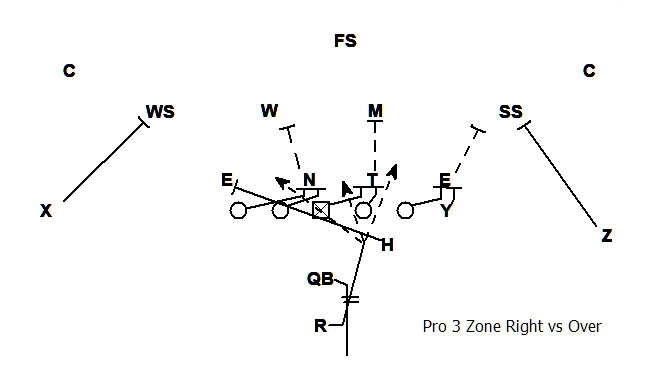
Everybody wants to talk about the Spinner Series when they're talking about the Single Wing Offense. And I understand why. There's a lot going on in the backfield, with backs spinning, faking handoffs, crossing paths, and running in different directions. It's designed to get your defenders looking at the shiny objects. (Figure 3)
But here's the important thing to understand about misdirection: When the offense has players carrying out fakes, those players aren't blocking anybody. That means if your defenders don't fall for the misdirection, the offense has fewer blockers available to execute the play.
That's why your key reads are so important.
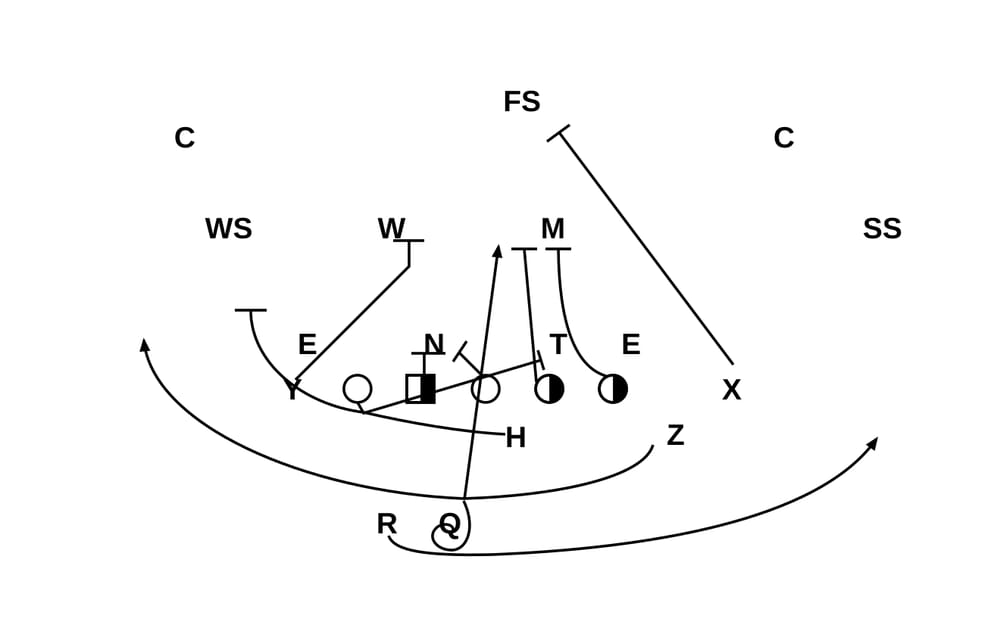
Figure 3: Rick Darlington's Spinner Series 2-Trap play, as I remember it and wrote it in my notes a decade ago. If the Linebackers focus on their guard reads instead of chasing the backfield action, it's just a simple trap play.
In our 4-2-5 Defense, we teach our linebackers to read the offensive guards as their primary key.
If he pulls, follow. If he doesn't, fill.
Those guards are going somewhere for a reason. They're going to block somebody. I don't want my linebackers abandoning those reads because a wing back runs across the formation or somebody spins in the backfield.
After getting their primary key read, they pick up the ball carrier as their secondary key read.
The same discipline applies to every position on the defense. Your defenders must trust the key reads they've worked on all season. Backside defenders need to be patient, too. Just because the backfield action looks like it's going away doesn't mean you can chase it. Trust your keys and be ready for the counter.
Force the offense to execute against a defense that's playing disciplined football. The misdirection of the Single Wing becomes much less dangerous when your defenders stop chasing shiny objects.
Build a Defense That Can Stop Anything
The Single Wing Offense is different from what most defenses see every week. But the answer isn't to install the flavor-of-the-week defense every time you face a different offense.
You need a defensive system that gives your players consistent rules, allows you to adjust to different formations, and puts all 11 defenders in the best position to do their jobs.
That's how you build a defense that can handle the Single Wing, the Wing-T, the Spread, or whatever else shows up on your schedule.
If you want to know more about building that kind of defense, download my free guide, What You Need To Know To Build The Ultimate Defensive Football Coaching System.
I'll walk you through the foundation of building a defensive system that your players can understand, execute, and adjust when they need to, no matter what front you run.




Most Popular Articles
- 4-2-5 Defense Positions: Fitting Your Personnel to Your System
- 10 Keys To Preparing a Football Practice Plan that Wins Games
- Coaching the Umbrella Run Fits Principle
- Identify These Four Weaknesses in Your Defensive Playbook to Make Great Adjustments
- Complete Guide to Coaching Football Drills that Win Games

Related Articles
- 4-2-5 Defense Positions: Fitting Your Personnel to Your System
- 10 Keys To Preparing a Football Practice Plan that Wins Games
- Coaching the Umbrella Run Fits Principle
- Identify These Four Weaknesses in Your Defensive Playbook to Make Great Adjustments
- Complete Guide to Coaching Football Drills that Win Games
GET THE FREE DIGITAL GUIDE FOR BUILDING THE ULTIMATE FOOTBALL DEFENSE THAT WINS GAMES
Shut Down Any Opponent When Your Team Misses Fewer Tackles, Allows Fewer Big Plays, and Gives Up Fewer Points. Enter your best email address below, and I'll send you a FREE copy of our latest Football Coaching Guide titled "What You Need To Know To Build The Ultimate Defensive Football Coaching System"!
Your information is safe with us and will not be shared
GET THE FREE DIGITAL GUIDE FOR BUILDING THE ULTIMATE FOOTBALL DEFENSE THAT WINS GAMES
Shut Down Any Opponent When Your Team Misses Fewer Tackles, Allows Fewer Big Plays, and Gives Up Fewer Points. Enter your best email address below, and I'll send you a FREE copy of our latest Football Coaching Guide titled "What You Need To Know To Build The Ultimate Defensive Football Coaching System"!
Your information is safe with us and will not be shared
Recent Posts

Recent Posts
© 2009-2026 Joe Daniel Football | Privacy Policy | Refund Policy | Terms of Service